Brick Rows and Columns: Array Worksheet
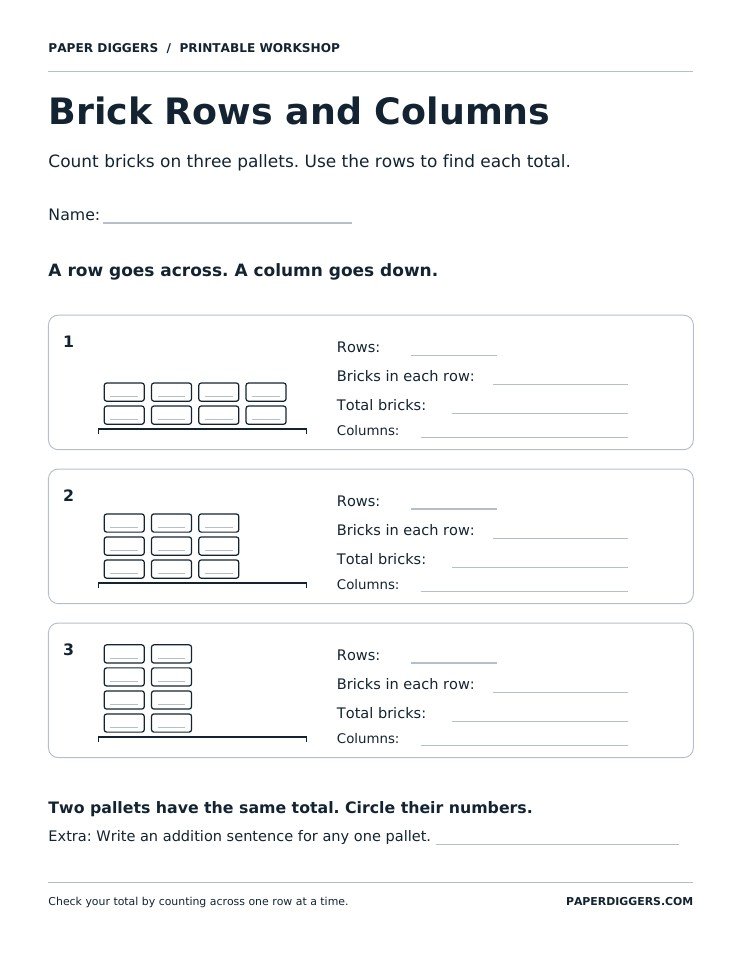
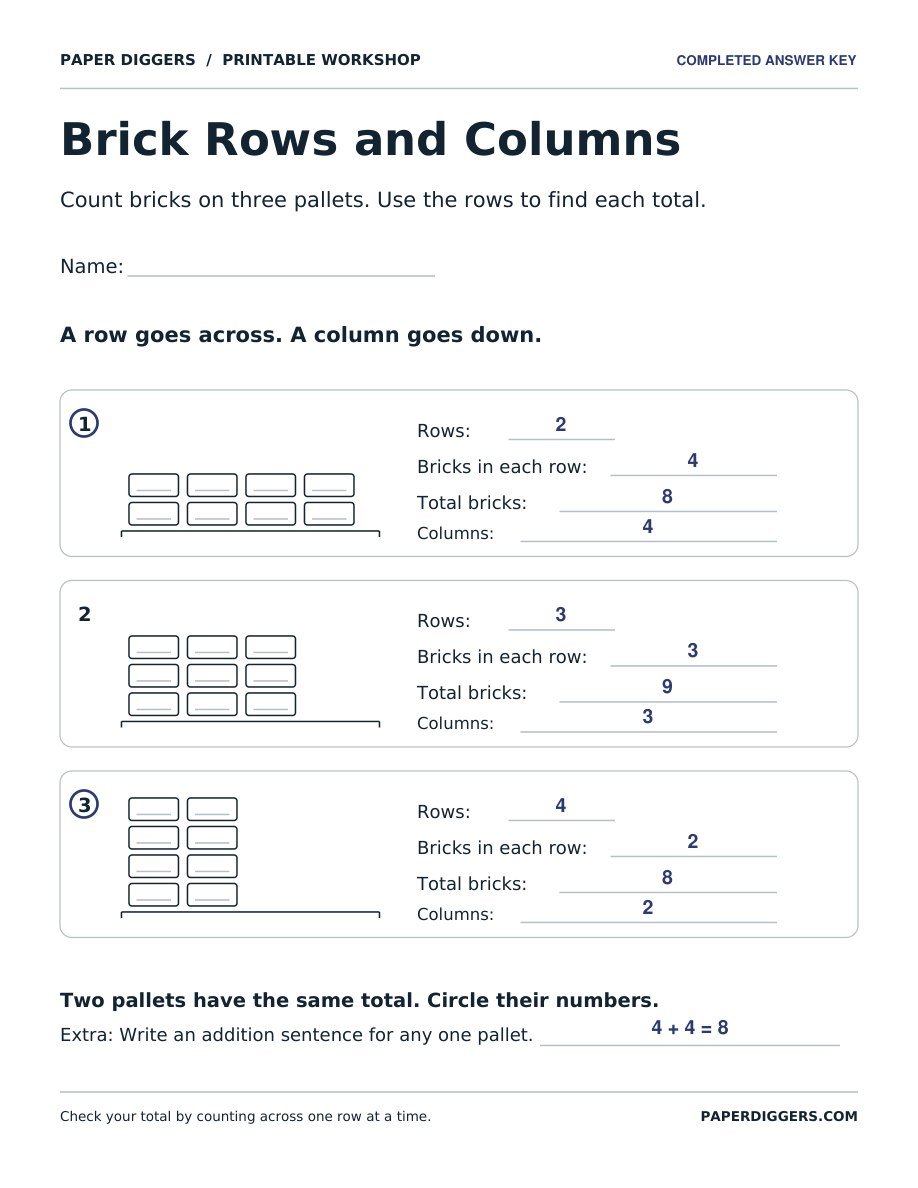
One pallet has two rows of four bricks. Another has four rows of two. Do they hold the same number? Compare three brick arrays without counting every brick one at a time.
Print one page at actual size on matching paper. Use a pencil to record each total.
Count the bricks in groups
- Trace one row across with your finger, then trace a column down.
- Write how many rows there are and how many bricks are in each. Add the rows to find the total.
- Circle the two pallet numbers with the same total. Explain why the shapes differ even though the totals match.
Try another activity
Worksheet at a glance
- SkillUse brick arrays to count rows and columns
- Best forLearners beginning equal-group counting
- TimeAbout 10 minutes
- You needPrinted sheet and a pencil
Name what counts as one row before counting. Rows go across; columns go from top to bottom.
Common questions
Can I count by rows instead of counting every brick?
Yes. Count the same number for each row and add those equal groups.
What changes when the array is turned?
Rows and columns trade places, but no bricks are added or removed.